Covid-19: Ayade Recalls Garment Factory Workers For Mass Production Of Masks

Gov. Ben Ayade of Cross River has recalled workers of the state- owned Garment Factory back to work, for the mass production of face and nose masks.

The workers are to resume work on March 31 after the factory had been disinfected.

The workers were initially sent home in line with the partial lock down declared by the governor as a precautionary measure against the spread of the coronavirus pandemic.

Speaking at the Industrial Park, Ayade told newsmen on Monday in Calabar that it has become imperative for the Garment Factory workers to return to work in view of the urgency of the need to tackle the deadly virus headlong.

“The Garment Factory workers are being recalled for mass production of nose/mouth masks in order to stem the pandemic.

“As the workers return to start mass production of the masks, we will ensure that they keep a reasonable distance from one another in keeping with the industrial distancing protocol”, he said.

Ayade disclosed that proper fumigation of the factory has been carried out preparatory to the resumption of the workers.

According to the governor, the returning Garment Factory workers will be properly kitted to ensure that they are fit for the purpose in addition to being paid special allowances.

“Working at this time when there is a general shut down requires a special compensation.

The Garment factory workers will be fairly compensated”, he said.
The governor disclosed that precautionary measures will also entail that the number of workers being recalled are manageable.

Ayade said he was equally activating the Cross River State Food Bank to ensure that food is delivered to most vulnerable in view of the lock down.

COVID-19: Nigeria Discharges 5 Covid-19 Patients In Lagos

Nigeria on Monday discharged five coronavirus patients at the Infectious Disease Centre, Yaba Mainland Hospital, Lagos under the supervision of Lagos State Government and Lagos state ministry of health.

This brings to eight the total number of discharged patients from the Centre.

The patients are said to have fully recovered from the virus and tested negative after being quarantined for weeks.

Although the discharged patients preferred anonymity, they expressed joy and satisfaction over the treatments they received.

While thanking the State Governor, Mr Babajide Sanwo-Olu for his support and proactiveness, they pleaded that the workers at the Centre should be given life insurance.

While speaking to the press, one of the patients said, I came in here on the 15th and after the test showed positive, I was asked to come back the next day. So I was admitted here.

“Initially, there were hitches but it later turned out fine. The health workers did fine, all our challenges were attended to. I’m a living witness together with my other colleagues.”

He gave an impressive hope, saying people should not panic as the virus could be defeated.
“We can beat it, I want to assure others that this is not their resting place. Encourage yourselves, take your medications and in no distant time, you will get out of here.

“I want to appeal to the federal government and Lagos State government that, they should remunerate all those workers who have volunteered to work accordingly, so as to serve as an encouragement to others, adding that,

“If they are not here as first responders, many would have died.”
Another patient said, “I was admitted last Sunday. Initially, there were challenges, the following day, they brought bed, mask and some equipment.

“Apart from what my colleague said, the workers should be insured. Proper insurance will let people do what they have to do.

He narrated a scenario where the workers could not attend to him because he tested positive, saying “they went back and I slept off, I woke up around 3 a.m. So they deserve life insurance to encourage them to do their job.”

CORONAVIRUS: Nigeria Records Second Death

Ehanire

The Nigerian Government has confirmed the second death from coronavirus (COVID-19) in the country.

The Minister of Health, Dr Osagie Ehanire, announced this on Monday at a press briefing in Abuja, the nation’s capital.

He said, “Till date, three persons have been discharged after successful treatment. But sadly, another fatality was recorded over the weekend in the person of a patient who had severe underlying illnesses.

“We have intensified contact tracing and our strategy remains to promptly detect cases, isolate them, and follow up with their contacts and also isolate and treat, in order to reduce the spread of the infection.”

“As of today, the 30th of March, 2020, we have recorded 111 confirmed cases of COVID-19 in Nigeria of which 68 are in Lagos, 21 in the FCT, seven in Oyo, three in Ogun, two in Bauchi, two in Edo, two in Osun, two in Enugu, and one each in Benue, Ekiti, Kaduna and Rivers States,” Ehanire added.

He stressed that Nigeria has 111 confirmed cases of COVID-19, saying a majority of them were persons who came in from overseas.

According to the health minister, the highest number of confirmed cases are in Lagos and Abuja because they serve as the major gateways to the country.

He also informed the gathering that all retired but able-bodied staff of the Nigeria Centre for Disease Control and the Federal Ministry of Health were being recalled.

Ehanire warned Nigerians to protect the elderly among them, as well as those having underlying health issues as they were the most vulnerable.

In his opening remarks, the Secretary to the Government of the Federation (SGF), Boss Mustapha, informed the audience that the briefing would be a daily event.

He explained that the purpose was to give an update and minimise the incidence of fake news in the country.
Mustapha stressed that the briefing would be the only approved briefing of the task force, although appearances on TV by relevant members would be allowed.

He announced that President Muhammadu Buhari has constituted a committee headed by the Vice President, Professor Yemi Osinbajo, to care for the economic challenges that the situation may bring for the time being.

The SGF also clarified the controversy triggered by the restriction of movement in Lagos and Ogun States, as well as the Federal Capital Territory (FCT).

He allayed the fear of Nigerians, saying workers in the financial institutions were not included in the stay-at-home order declared by the President in his Sunday broadcast to the nation.

COVID-19: 3 Men Jailed For Bleaching Quarantine In Hong Kong

Three men were sentenced to imprisonment on Monday for violating Hong Kong’s compulsory quarantine measures.

A 31-year-old man was given a three-month custodial sentence for giving regulatory officials a false residential address.

Meanwhile a 37-year-old and a 41-year-old violated the restrictions by leaving their places of residence.
Both were intercepted at border-control points between Hong Kong and mainland China.

The men received respectively 10 days and six weeks’ imprisonment.

The government said in a statement that they welcomed the judgment and that the sentences sent a clear message to the community that breaching quarantine orders is a criminal offense.

Also, the government would not tolerate the breach of quarantine.
Hong Kong continues to see an escalation in cases.

The government issued a new measure to make 14-day quarantine compulsory for anyone entering the city from overseas or from mainland China.

There are 641 confirmed Covid-19 cases in Hong Kong, a number that has tripled over a two-week period as overseas residents rushed to return from Europe, as well from Hubei province.

Hubei province is where the outbreak originated and where the number of infections has run into the thousands.
Those in quarantine must wear a QR-coded trackable wristband and remain in their places of residence.

But there are currently more than 32,000 people undergoing such measures and criticisms include questions about the effectiveness of the bands and about the government’s ability to keep track of such numbers.

In response to the second wave of infections in Hong Kong the government has limited gatherings to a maximum of four people and shut down public areas, such as sports grounds.

COVID-19: Lockdown In Zimbabwe, “You Win Coronavirus Or You Win Starvation”

“We are already ruined. What more harm can coronavirus do?” Irene Kampira asked as she sorted secondhand clothes at a bustling market in a poor suburb of Zimbabwe’s capital, Harare.

People in one of the world’s most devastated nations are choosing daily survival over measures to protect themselves from a virus that “might not even kill us,” Kampira said.

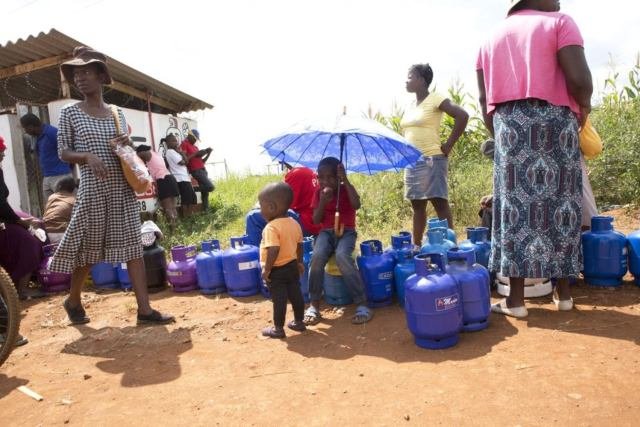
Even as the country enters a “total lockdown” over the virus on Monday, social distancing is pushed aside in the struggle to obtain food, cash, cheap public transport, even clean water. The World Health Organization’s recommended virus precautions seem far-fetched for many of Zimbabwe’s 15 million people.

“It’s better to get coronavirus while looking for money than to sit at home and die from hunger,” Kampira said, to loud approval from other vendors.

The southern African nation has few cases but its health system is in tatters, and the virus could quickly overwhelm it. Hundreds of public hospital doctors and nurses have gone on strike over the lack of protective equipment. Many Zimbabweans are already vulnerable from hunger or underlying health issues like HIV, which is present in 12% of the population.

Last year a United Nations expert called the number of hungry people in Zimbabwe “shocking” for a country not in conflict. The World Food Program has said more than 7 million people, or half the country, needs aid.
Harare, like most cities and towns across Zimbabwe, has an acute water shortage and residents at times go for months, even years, without a working tap. Many must crowd communal wells, fearing the close contact will speed the coronavirus’ spread.

“If the taps were working we wouldn’t be here, swarming the well like bees on a beehive or flies on sewage. We are busy exchanging coronavirus here coughing and spitting saliva at each other,” said 18-year old Annastancia Jack while waiting her turn.

The government has closed borders and banned gatherings of more than 50 people while encouraging people to stay at home.

But the majority of Zimbabweans need to go out daily to put food on the table. With inflation over 500% most industries have closed, leaving many people to become street vendors. Zimbabwe has the world’s second-largest informal economy after Bolivia, according to the International Monetary Fund.
Police in recent days have tried to clear vendors from the streets, in vain. As in other African countries where many people rely on informal markets, a lockdown could mean immediate food shortages.

Once-prosperous Zimbabwe was full of renewed promise with the forced resignation in late 2017 of longtime leader Robert Mugabe. But President Emmerson Mnangagwa has struggled to fulfil promises of prosperity since taking power. He blames the country’s crisis in part on sanctions imposed on certain individuals, including himself, by the U.S. over rights abuses.

Daily necessities in Zimbabwe make social distancing an elusive ideal. In downtown Harare, hordes of people congregate at banks for cash, which is in short supply. Others pack public transport.

“We are the only ones practicing social distancing, we sit in our cars all day,” said Blessing Hwiribisha, a motorist in a fuel line snaking for more than a kilometer in the poor suburb of Kuwadzana.

“Look at them,” he said. He pointed at a supermarket across the road where hundreds of people shoved to buy maize meal, which has become scarce due to a devastating drought and lack of foreign currency to import more.
“What is happening in Zimbabwe is very scary. It’s like we are playing cards. Its either you win coronavirus or you win starvation,” said Tinashe Moyo at the supermarket. “I am very scared.”

Few health workers are available as doctors and nurses strike.

“There is a difference between being heroic and being suicidal,” said Tawanda Zvakada, president of the Zimbabwe Hospital Doctors Association.

Health workers described a lack of disinfectants, sanitizers and even water at hospitals.

And yet Health Minister Obadiah Moyo repeatedly says Zimbabwe is “well prepared” to deal with COVID-19 cases.

But frightened health workers cited the death of a prominent broadcaster at an ill-equipped isolation center specifically reserved for COVID-19 cases.

“They didn’t have a ventilator to help him,” Zvakada said. “The inability of our system to manage one patient is worrying. What about when there are 50 patients?”

Zimbabwe has less than 20 ventilators to help people in severe respiratory distress, he said. He said the country needs hundreds to adequately deal with the virus.

“We see a situation where Zimbabwe can become a graveyard if we are not careful,” said Itai Rusike, director of the Harare-based Community Working Group on Health.